
Context and problem
In e-commerce, the speed of the checkout process is critically important.
Any unnecessary step, especially the manual entry of long card numbers, creates friction that reduces conversion rates.
What was wrong
Users manually entered 16 digits of the number, the date, and the CVV code.
A high percentage of input errors required going back and correcting them.
On mobile devices, users expect seamless payments in 1-2 taps, not filling out forms.
The standard card verification through a full transaction incurred additional costs for the business.
Goal
Simplify and speed up the card binding process, increase payment conversion, and reduce
operational costs for acquiring.Implement card scanning via camera on both platforms (iOS/Android).
Implement card addition via NFC for Android.
Design an interface for a non-trivial card verification scheme through micro-debit (from 10 to 20 ₽)
and enter the exact amount.Take into account the differences in user expectations and technical capabilities of iOS and Android.
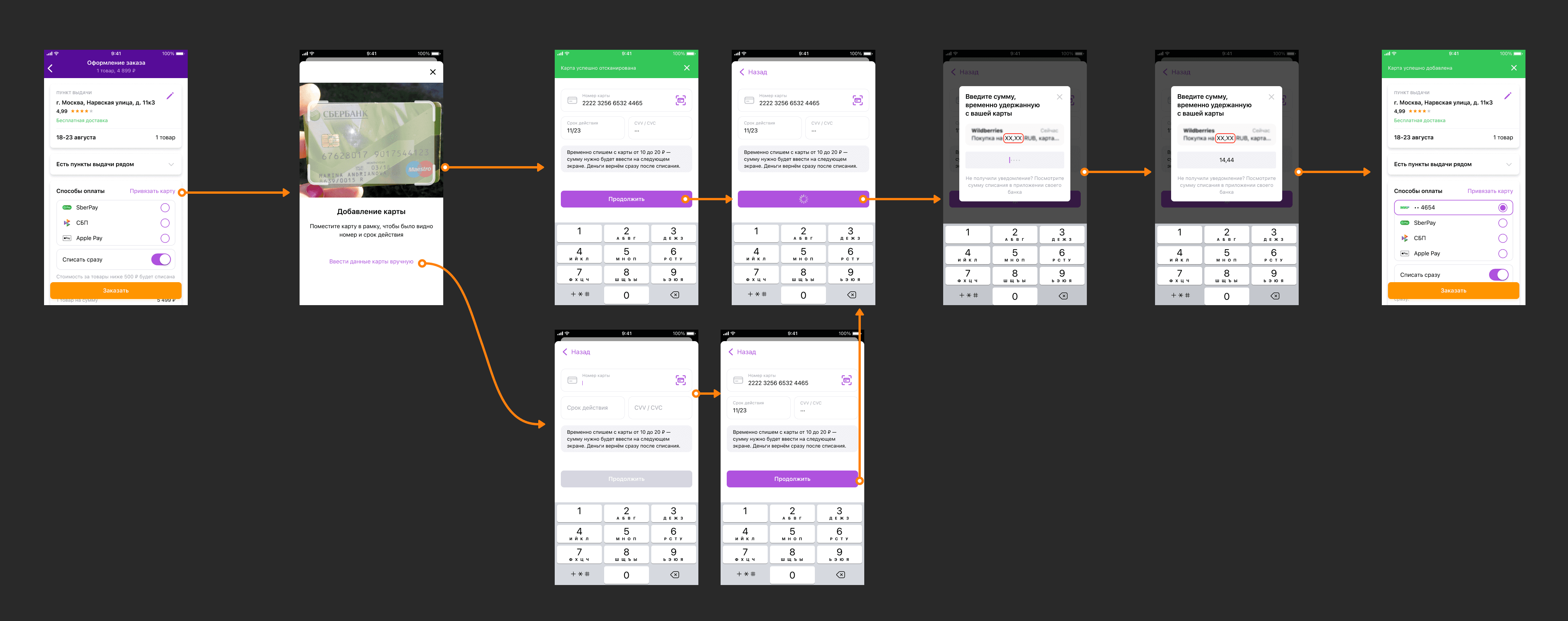
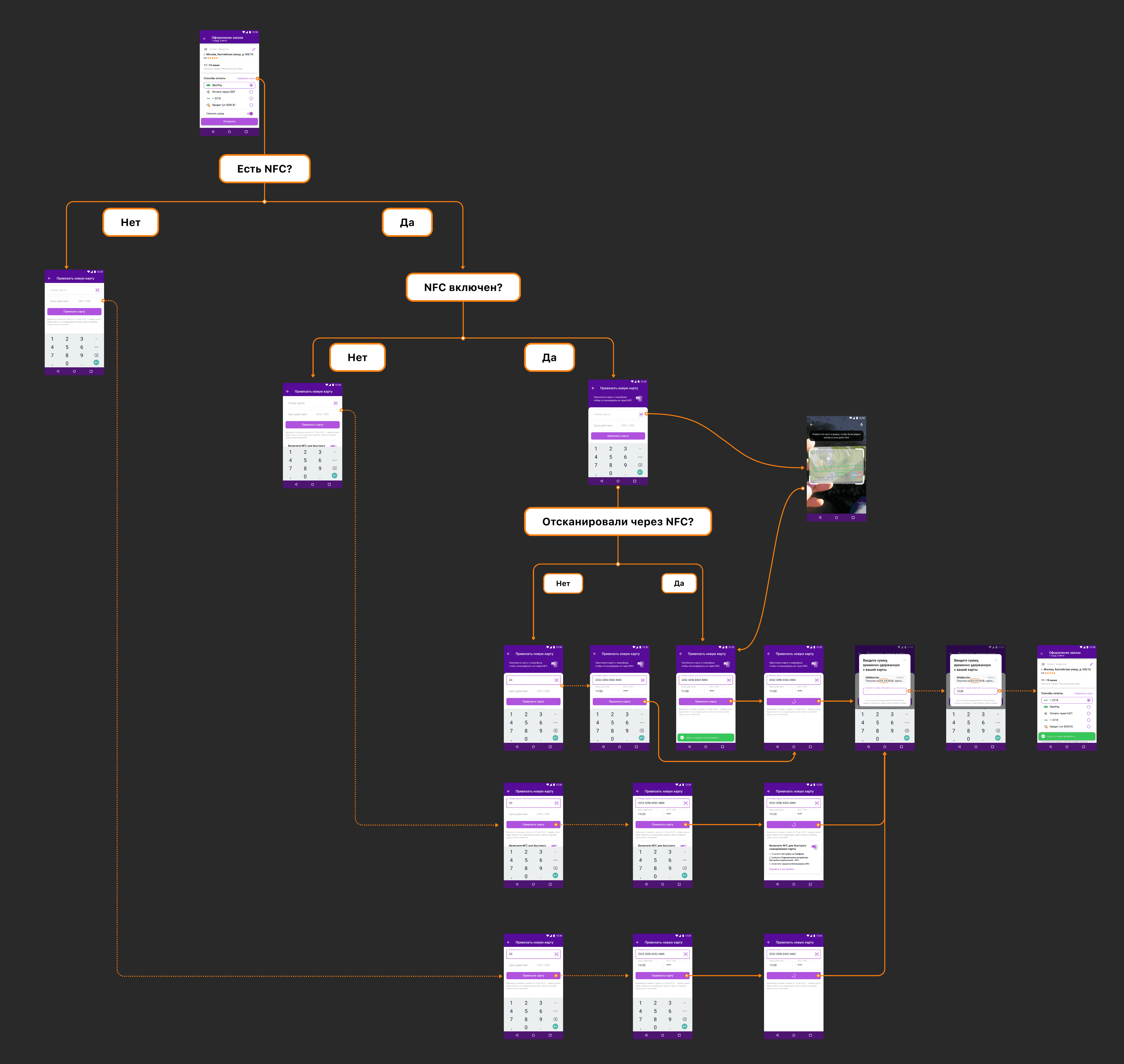
Input method selection
At the first step, the user sees the familiar card input form, but with the option not to fill it in manually,
but to scan or tap the card.
Camera (iOS and Android)
When you click on the scanner icon, a custom camera interface with a clear mask for the card opens. The system automatically reads the card number and expiration date, after which it returns the user to the form — only the CVV needs to be entered.
NFC (Android)
For Android users, the "tap the card to the back cover" script is available.
This is the fastest addition, available only on this platform.
Card verification through micro-debit
We used a scheme that allows you to confirm the card without spending on a full bank transaction:
the system temporarily deducts a random amount (up to 20 ₽), the user sees it in the bank and enters it in the application.
The money is returned immediately.
How it was made clear
On the "Attach Card" screen, the mechanics were immediately explained
On the amount input screen, context was added ("Purchase for XX.XX rub...") so that the user
does not confuse the test deduction with the order amount.In case of an error, the scenario repeats without losing context.
Results and metrics
Speed
The card binding time has decreased from ~45 seconds (manual input) to ~10 seconds when scanning
and to 3-5 seconds when using NFC.
Conversion
The conversion to successful card binding during the checkout process increased by 13.2%
(exact figures are under NDA, but the growth is significant).
Errors
The number of errors when entering details in scanning scenarios has decreased to almost zero.
Costs
The micro-signing scheme allowed for the abandonment of full transactions during verification, which reduced
operational costs for acquiring banks.